
Connecting Resilience
A crisis intervention in the face of internet disruption
Connecting Resilience
Master thesis 2024
Duration: 5 months
Own work
Collaboration with Nokia
Location: Umeå (Sweden) & Helsinki (Finland)
Tools learned and used:
Human-centered thinking, qualitative research methodology, stakeholder engagement, service design, scenario building and user journey mapping, crisis communication analysis, systems thinking, collaborative workshop facilitation


How might we ensure access to critical information and resources when traditional networks fail?
Natural disasters create a critical communication gap between initial mass alerts (typically sent via SMS) and the re-establishment of network connectivity, which may take hours or days. During this period, affected communities are left vulnerable, uncertain, and isolated, even though they're desperately seeking guidance on shelter, first aid, and loved ones' safety.
The goal for this project was to create a decentralized, community-centered solution that bridges this communication gap by providing offline access to critical information and fostering collective action during the immediate aftermath of crises.
Golden Seed Award
UX Design Awards
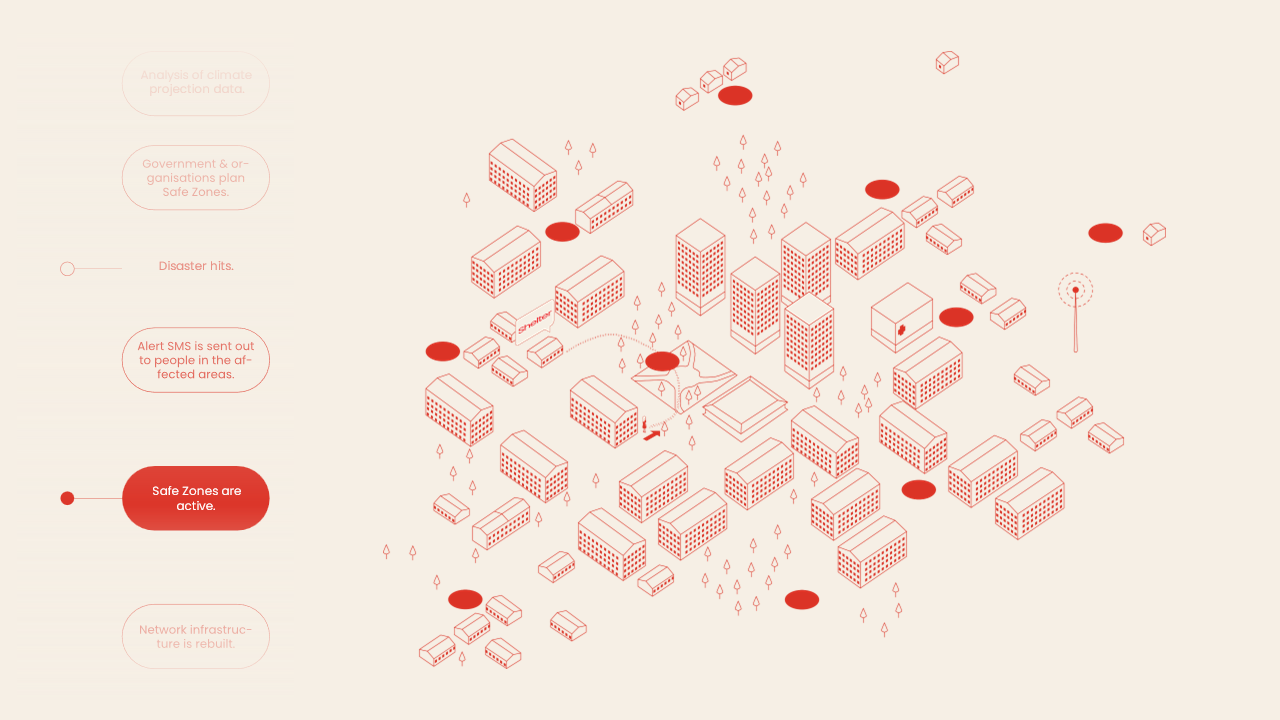
Conceptual model of the Safe Zones.
The red circles mark Safe Zones.
Illustration inspired by Milija Lindberg (2016), adapted by me.
The concept proposes two core components:
The Hub (Physical Gathering Spaces)
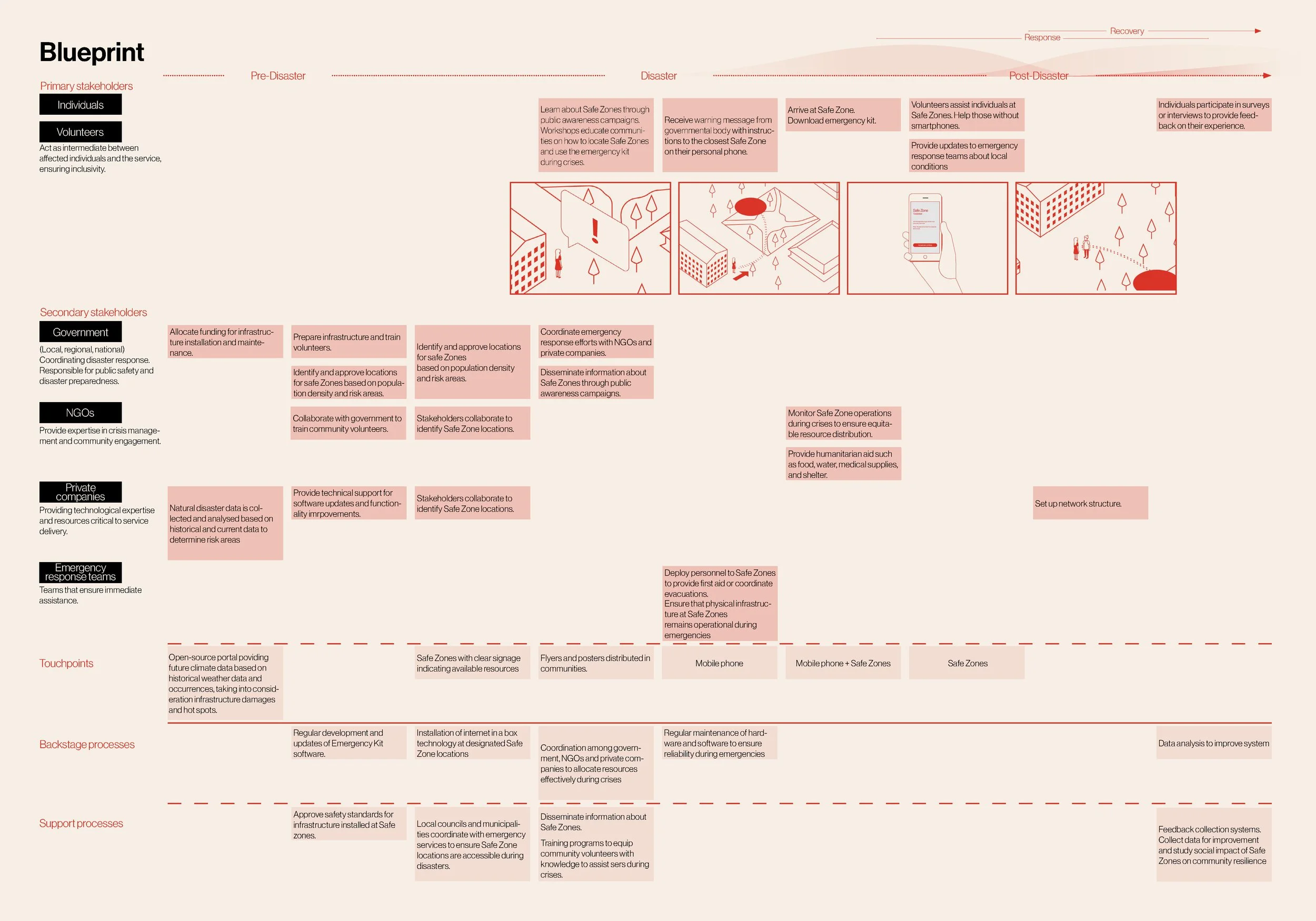
Safe Zones are strategically located near community spaces, such as schools, libraries, residential buildings, where people naturally gather. These hubs serve multiple functions:
Offline WiFi Access: Powered by low-cost digital libraries (inspired by the Internet-in-a-Box technology, currently used for educational purposes in areas without connectivity)
Solar-Powered Infrastructure: Charging stations ensure device functionality without grid dependency
Printed Materials: Physical guides supplement digital resources for those without smartphones
Community Coordination: Spaces for human interaction, information sharing, resource distribution, and collective decision-making
The Emergency Kit (Offline Digital Library)
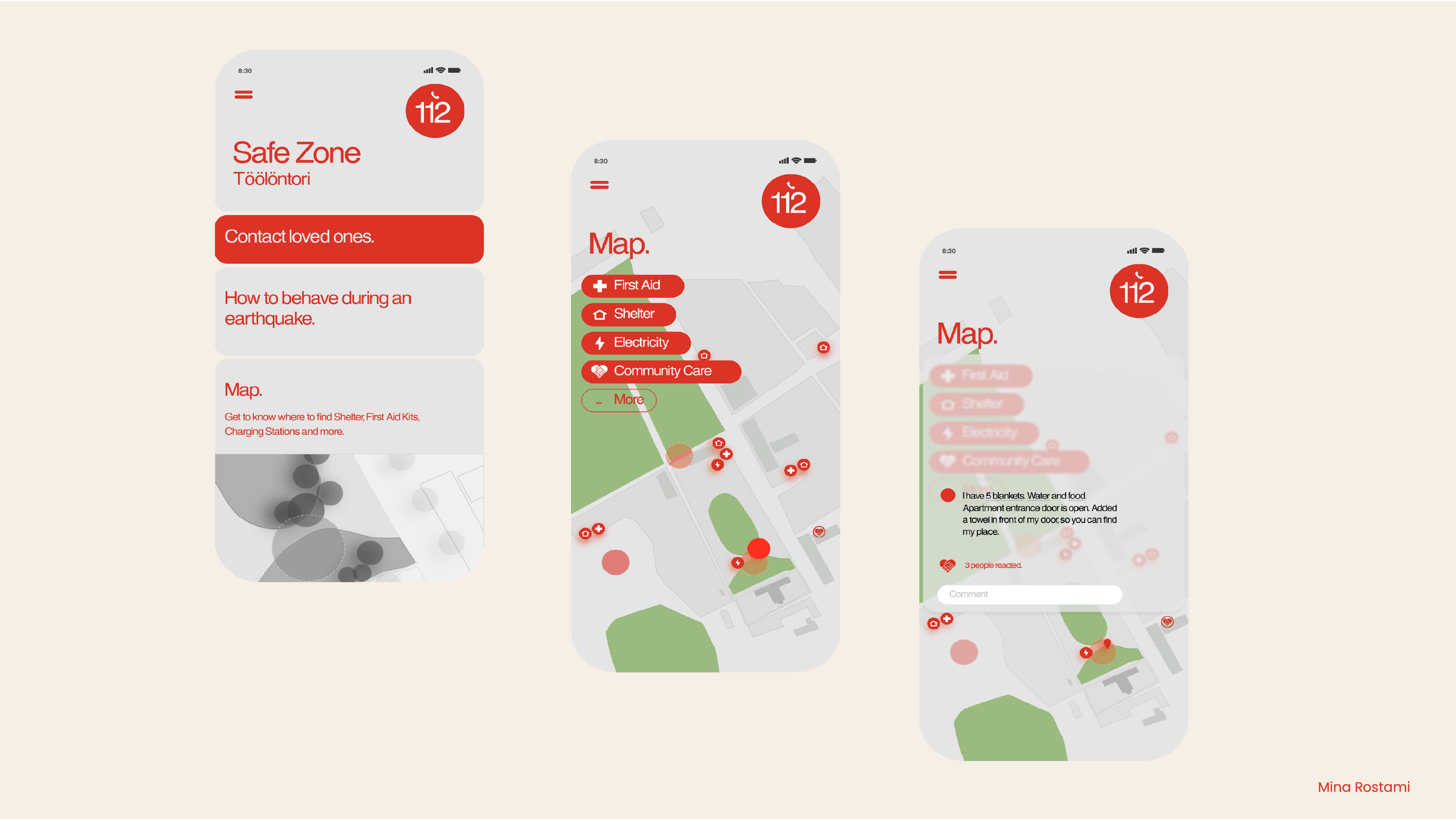
Downloaded via local WiFi at Safe Zones, this portable offline library contains:
Offline Maps: Local area navigation with evacuation routes and shelter locations
Emergency Contacts: Directory of emergency services and aid organizations
Survival Guides: First aid instructions, crisis management steps, disaster preparedness information
Resource Sharing Tools: Platforms for uploading local updates about shelter capacity changes, road closures, and available supplies
Communication Features: Tools for broadcasting updates and sharing resources within the Safe Zone community

The alert
When a disaster strikes, an initial SMS alert is sent with essential information: the type of crisis, clear directions to the nearest Safe Zone based on memorable landmarks, and a warning that internet connectivity may fail. This message is broadcast to everyone in the area via Cell Broadcast, ensuring all mobile devices on local networks receive it.
The SMS is deliberately concise to build trust and avoid alert fatigue, so only the most crucial information is delivered. The design emphasizes simplicity and immediacy, providing actionable guidance for people who may be under stress.
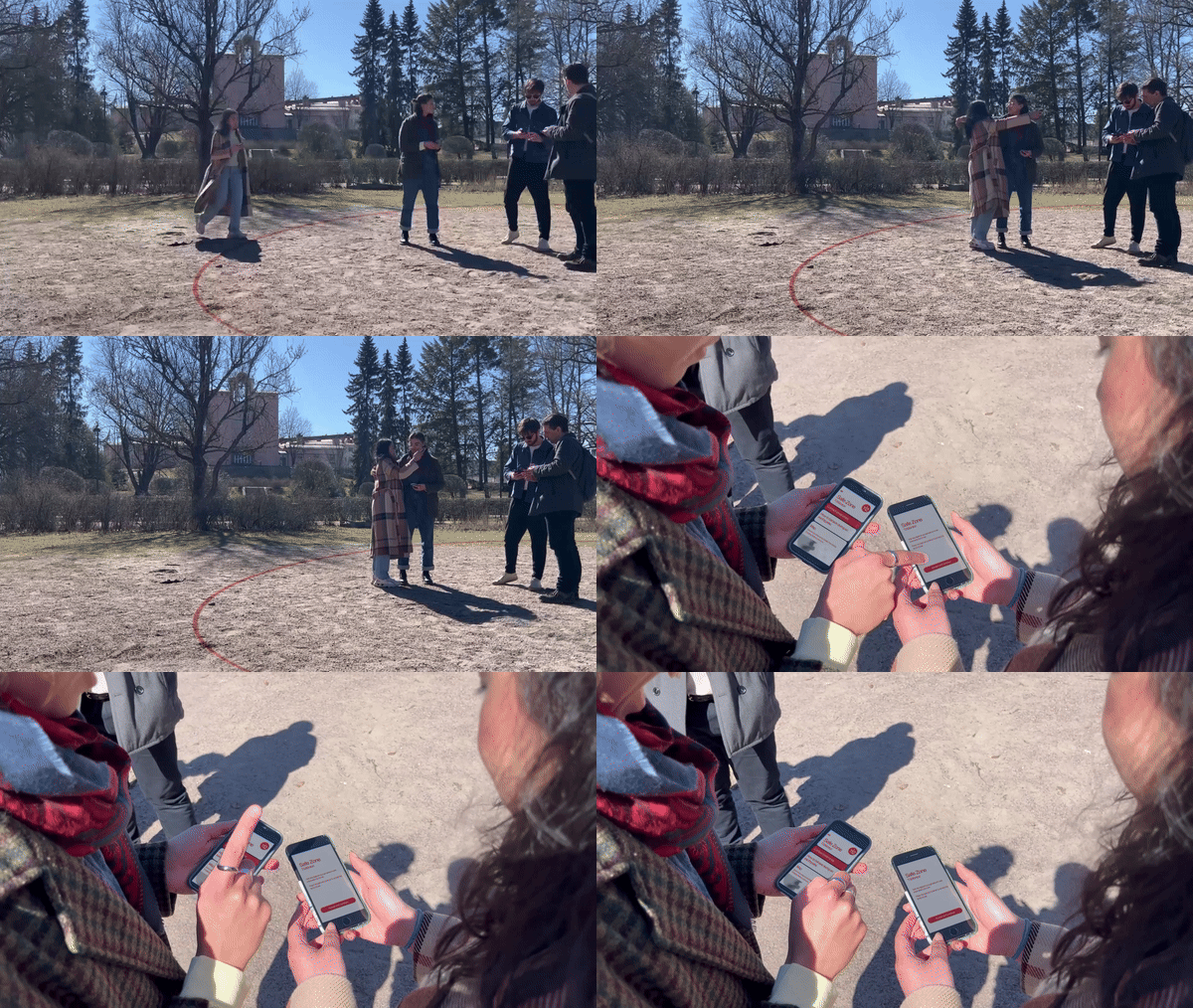
At the Safe Zone
When people arrive at the Safe Zone, they enter a physical gathering space equipped with an offline emergency WiFi network. Through this network, they can download a simple Emergency Kit to their phones, while volunteers support those without smartphones or with limited digital skills. Once installed, the kit automatically switches the device to low-power mode and highlights the most urgent information first, reducing cognitive load. The Safe Zone also functions as a social anchor where people share information, support each other emotionally, and ensure that vulnerable community members are not left out.
Research
What is resilience?
Early in the project, the focus was on understanding how different stakeholders define resilience and what kinds of solutions currently exist in the context of disasters. Resilience emerged as a multi-layered concept: while institutions and industry often framed it in terms of infrastructure robustness and rapid recovery, people who had lived through disasters described it more in terms of adaptability, mutual support, and the ability to “build back better” together.
Existing resilience solutions ranged from centralized early-warning and alert systems to emergency apps and large-scale infrastructure programs, but many of them either depended heavily on stable connectivity or did not fully account for the lived realities of vulnerable groups. This contrast highlighted a gap between top-down, technology-led approaches and bottom‑up, community-led practices that appear spontaneously during crises.
The importance of collective action

Collective action. Own work.
I then investigated how collective action emerges when formal systems fall short. Accounts from past disasters illustrated that communities improvise rapidly, using whatever channels remain available, such as word of mouth, ad‑hoc networks, local leaders, and physical gathering points, to share information, locate resources, and support each other. These grassroots practices often prove more responsive than centralized systems in the first hours after a crisis.
This reinforced the idea that any meaningful intervention should not replace community initiative, but instead recognize, formalize, and support it through light‑weight tools and accessible infrastructure.
Interviews
To ground my insights in real experiences, semi‑structured interviews were conducted with people who had lived through earthquakes and floods in different countries, alongside experts from telecommunications and humanitarian organizations.
Survivors described what it feels like when the network drops, how quickly confusion and isolation set in, and how they navigate uncertainty using the technology available to them, such as phones and radios, and improvised communication chains. Experts contributed perspectives on technical feasibility, operational constraints, and the limits of current emergency systems. Together, these conversations revealed recurring themes: the omnipresence of mobile phones even during evacuation, low awareness or use of existing emergency apps, the digital divide affecting elderly and disabled people, and the importance of clear, minimal, trustworthy communication under stress.
Role‑playing exercises
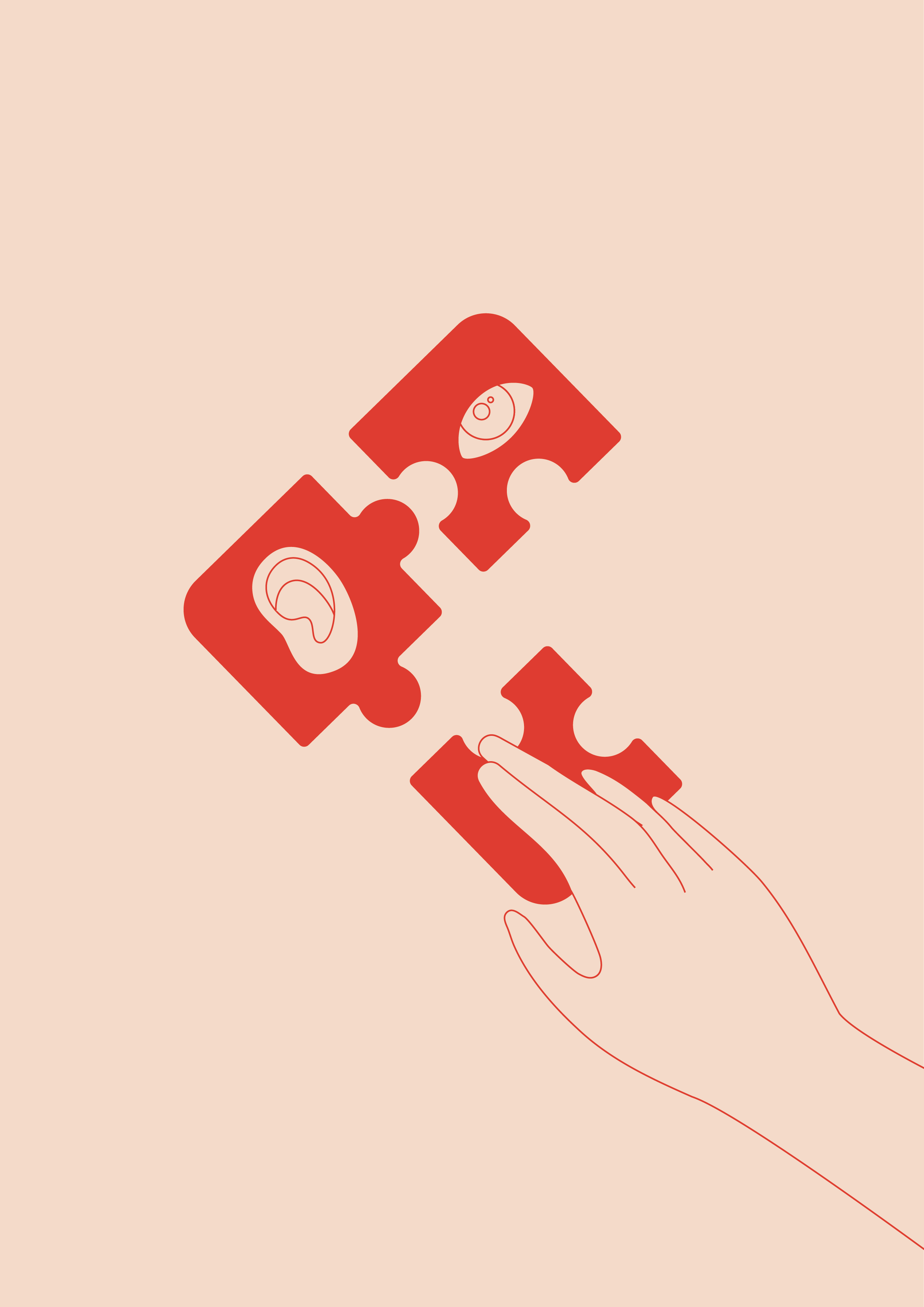
Activities. Own work.
Building on the interview findings, role‑playing exercises and scenario enactments were used to explore how people might actually encounter and use Safe Zones in a crisis.
Participants were guided through the journey of receiving an alert, moving toward a Safe Zone, connecting to local WiFi, downloading the Emergency Kit, and using it to make decisions. These sessions exposed practical friction points, such as wayfinding to Safe Zones, expectations about connectivity, and how much information users can handle at once, while also validating the value of a physical gathering space where people can ask others for help. The exercises showed that even low‑fidelity prototypes, when experienced in sequence, can surface emotional responses and usability issues that would not appear on paper.
Key learnings
Across all research activities, several key takeaways shaped the final concept. Resilience cannot be treated as purely technical, in this context, it is fundamentally about people, relationships, and the ability to act together under pressure. Decentralized, low‑tech infrastructure that works offline can meaningfully complement centralized systems by covering the communication gap when networks fail. Leveraging existing technologies (like internet-in-a-box) and low-tech tools makes the system adaptable across diverse contexts without heavy engineering. Simplicity and clarity are more important than feature richness, especially for users who are stressed, tired, or unfamiliar with digital tools.
And finally, no single configuration fits all: each community needs a locally adapted setup of Safe Zones, content, and rituals that aligns with its own geography, risks, and social fabric.
Thinking further…
How might we harness local, open-source AI models to strengthen community-led resilience during disasters?
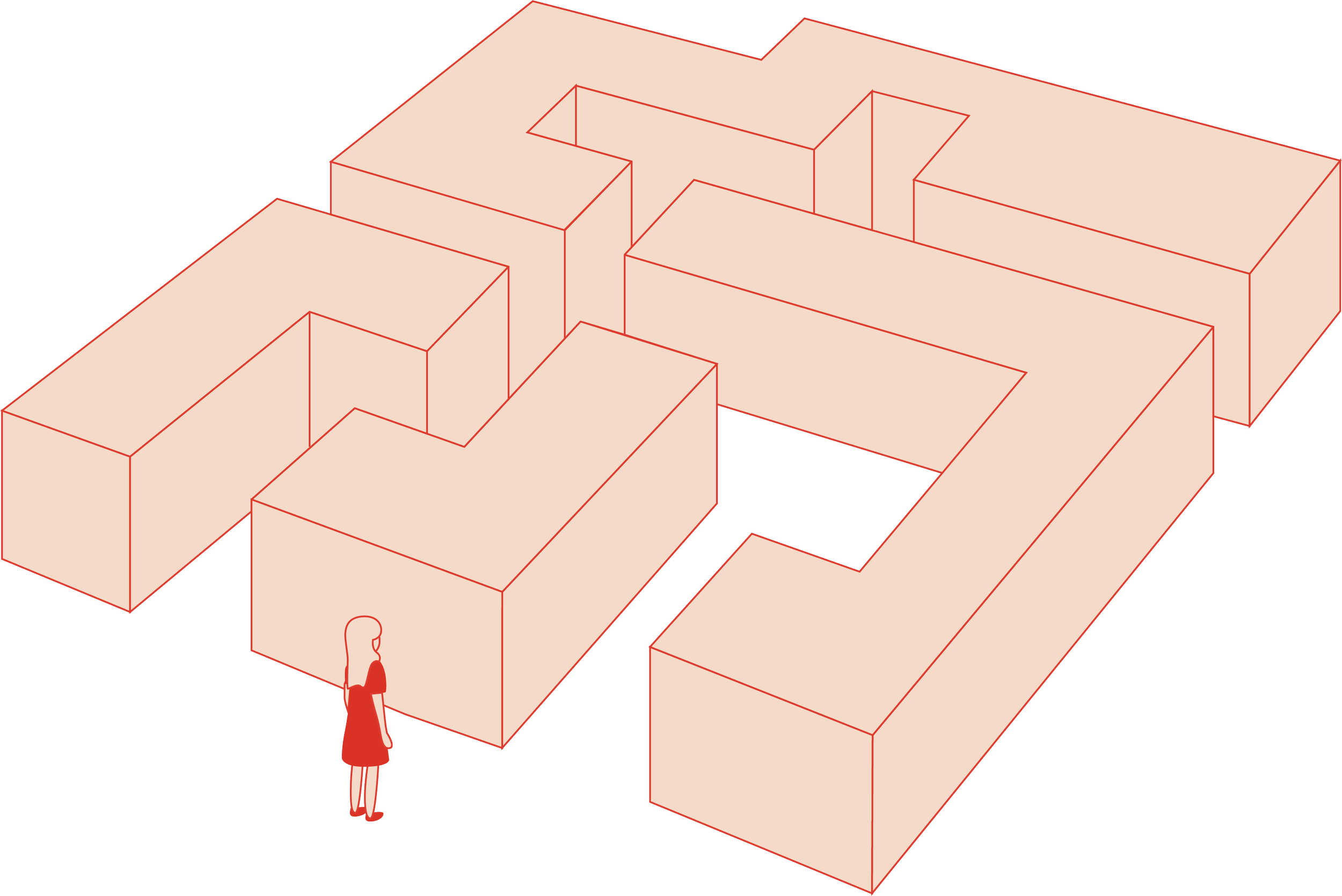
Reflections. Own work.